Case 10 / Aerodynamic modelling
DATCOM aerodynamic modelling workflow
Read an aerodynamic input deck, connect geometry and flight conditions to coefficient outputs, and explore a credited reference dataset.
Geometry inputs · coefficient analysis · reference-data explorerDATCOM input development and aerodynamic data interpretation
Can you trace an aerodynamic curve back to the geometry, condition, units and source that produced it?
I adapted DATCOM input decks and interpreted aerodynamic outputs as part of the aircraft-design workflow. This case connects reference geometry and flight conditions to lift, drag and pitching-moment coefficients. The interactive explorer uses a credited Citation reference dataset to demonstrate coefficient interpretation.
Method and workflow
- 01
Identify the source
Separate supplied examples from a modified deck and retain the original template attribution.
- 02
Read the definition
Inspect reference quantities, geometry, flight conditions and the units requested by the deck.
- 03
Read the outputs
Keep static coefficients and derivative units distinct. View lift, drag and moment over the sampled incidence range.
- 04
Check the connection
Require a documented geometry mapping before treating a CAD model and a coefficient table as the same aircraft.
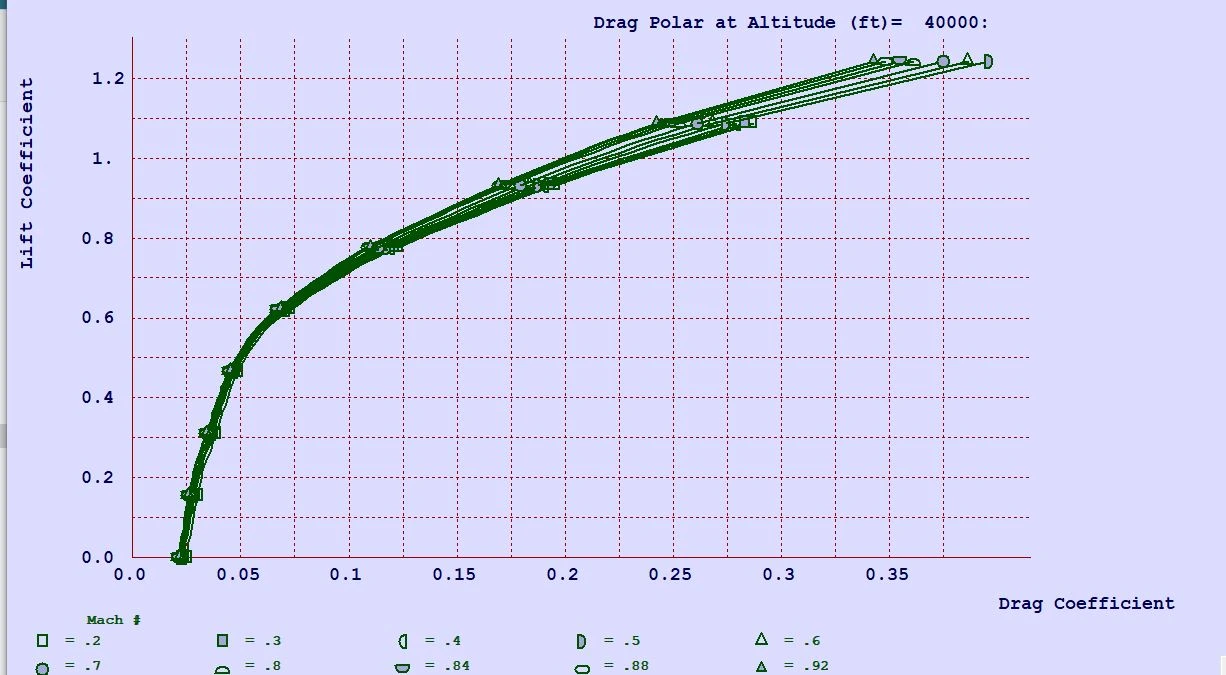
Read the coefficient curves.
Reference dataset: DATCOM+ Citation example. Input template: Bill Galbraith, Holy Cows, Inc.
These curves belong to the supplied Citation reference example. A negative pitching-moment slope describes a local restoring tendency at the reference condition; complete aircraft stability requires further analysis.
Project figures
Model assumptions and scope
- The interactive curves use the Citation reference dataset credited below; they are separate from the FireBolt configuration.
- Geometry, reference quantities and units must be consistent when transferring coefficients into a flight-dynamics model.
- DATCOM estimates are presented without wind-tunnel or flight-test correlation.
Potential extensions
Document the geometry mapping and unit conventions of the adapted model before comparing its outputs with other analysis tools.
Let’s work through it.
Robotics, simulation and control consultation across Canada, with remote support available internationally. Share your system and the result you need.